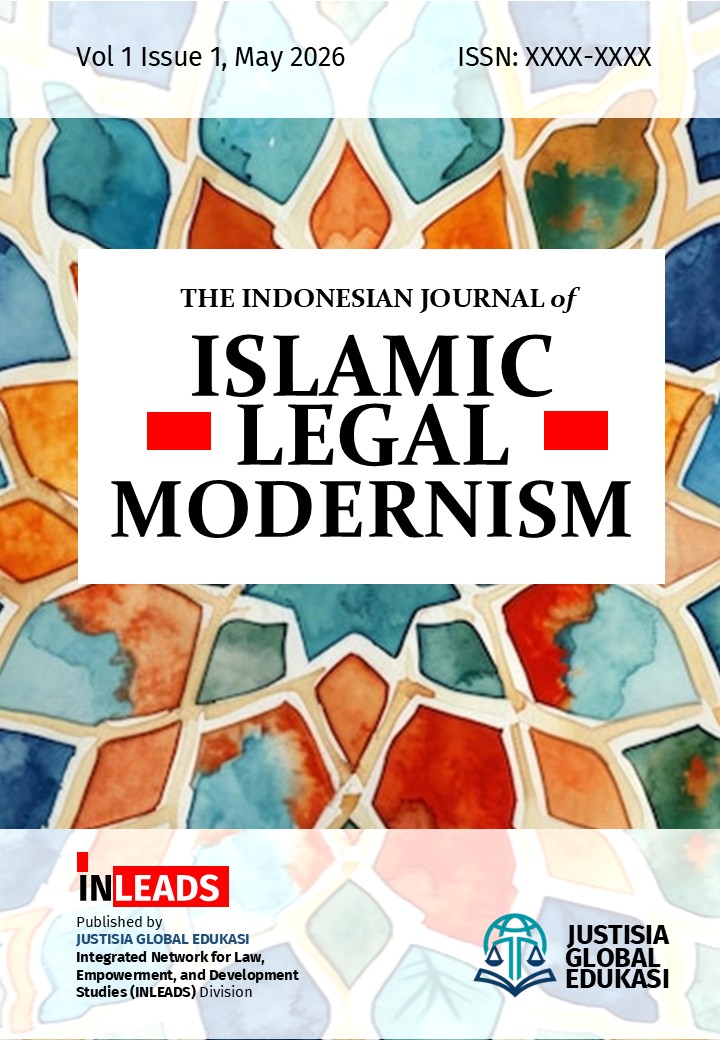
The Role of Indonesian Fatwa Institutions in Responding to Artificial Intelligence Technology
Keywords:
Artificial Intelligence, Fatwa Institutions, Islamic Jurisprudence, Ijtihād, Islamic Legal ModernismAbstract
Artificial intelligence (AI) technology is transforming social, economic, and legal interactions across contemporary societies, raising complex ethical and normative questions that require religious as well as legal responses. This study examines the role of Indonesian fatwa institutions in addressing the opportunities and challenges associated with artificial intelligence technology. Using a normative approach informed by Islamic legal modernism, the research analyzes the interpretive methods and institutional responses employed by fatwa bodies when evaluating emerging technological developments. The findings indicate that fatwa institutions play an important role in providing ethical guidance and normative frameworks for Muslim communities navigating technological change. Through principles such as ijtihād, maṣlaḥah, and Maqāṣid al-Sharī‘ah, Islamic scholars seek to evaluate AI-related issues including data privacy, algorithmic decision-making, automation, and ethical accountability. The study further reveals that contemporary technological developments challenge traditional legal categories and require interdisciplinary engagement between religious scholars, legal experts, and technology specialists. Fatwa institutions increasingly adopt adaptive interpretive approaches to ensure that Islamic legal guidance remains relevant in rapidly evolving technological contexts. The research argues that Islamic legal modernism provides a flexible framework for addressing novel issues while preserving the foundational objectives of Islamic law. The study concludes that the effective engagement of fatwa institutions with artificial intelligence can contribute to the development of ethical technology governance that balances innovation, social welfare, and religious values. These findings enrich scholarly discussions concerning Islamic jurisprudence, technological transformation, and legal adaptation in the digital era.
Downloads
Published
Issue
Section
License
Copyright (c) 2026 Pratama Agus Widodo (Author)

This work is licensed under a Creative Commons Attribution 4.0 International License.
All writings published in this journal are the personal views of the authors and do not represent the views of this journal and the author's affiliated institutions. Author(s) retain copyrights without any restriction under the license of Creative Commons Attribution 4.0 International License (CC BY 4.0).